
Restorative Dentistry in Herndon, VA: Honest Fixes for Fillings, Crowns, Bridges, and More
A chipped tooth. A filling that came loose during dinner. A denture that doesn't fit the way it used to.
However it happened, you're not the first person to walk through our door with it, and you won't be the last. Dr. Imaney Ahmad and our team fix what's broken and explain exactly why, without pushing you into work you don't need.
If it's been a while since anyone's looked at your teeth, that's fine too. You're welcome here, and you won't hear a lecture about it.
Request an Appointment
We'll check your coverage and lay out the cost before any work begins. Call (703) 793-0076 or book online, whichever is easier for you. Saturday appointments are available too.
How We Decide What Your Tooth Actually Need
Restorative dentistry covers anything that repairs a tooth that's decayed, cracked, worn down, or missing outright. Treatment isn't one-size-fits-all. Dr. Ahmad follows a simple rule before recommending anything: prevent before you fill, fill before you need a root canal, and save the tooth before anything more involved.
Sometimes it's a small cavity that only needs a filling. Other times a bigger crack calls for a crown to hold the tooth together, or if the tooth is gone for good, a bridge or a denture takes its place. Needing this kind of work isn't unusual: the National Institute of Dental and Craniofacial Research reports that most adults have had decay in their teeth at some point, so a filling or a crown puts you in very ordinary company.
Cost is usually the real question underneath all of this. Before any treatment starts, we verify your benefits and walk you through your estimated cost. No surprise bill later. We also take most PPO plans, Medicaid, Smiles for Children, and CareCredit financing, because paying for the work shouldn't become its own separate problem.
This is just one part of our full dental care, alongside checkups, gum treatment, and everything else that keeps your mouth healthy long after this particular fix is done.
Our Crown and Bridge Restoration Work Rebuilds Teeth You Thought Were Beyond Saving
When a tooth has cracked, broken down from an old filling, or lost too much structure to decay, a crown covers what's left and holds it together. It fits over the tooth like a cap, shaped and shaded in porcelain to match the teeth next to it. Dr. Ahmad places crowns after root canals too, since the tooth is often more brittle once the nerve is gone.
Missing a tooth entirely is a different problem, and that's where a bridge comes in. As the Cleveland Clinic explains, a bridge restores chewing function and appearance by anchoring a replacement tooth to the crowns on either side of the gap. Both start with an exam and a plain explanation of what your tooth needs. You'll know exactly what your crown and bridge restoration involves before we begin.
Dental Crowns Protect a Tooth That Can No Longer Hold a Filling
Fillings handle small areas of decay. Once the damage goes further than that, a dental crown steps in and covers the whole visible tooth so it can handle normal biting and chewing again.
We shape and shade every crown to blend with your other teeth. It won't stand out when you smile or talk. Ask us during your exam whether dental crowns make more sense for your tooth than a filling. We'll show you the X-ray so you can see it for yourself.
Dental Bridges Fill the Gap Left by a Missing Tooth Without Surgery
If you're missing a tooth and would rather not go through implant surgery, a bridge might be the more straightforward answer. It anchors to your two neighboring teeth instead of the jawbone, so there's no cutting into the bone and no separate surgeon to coordinate with.
We take impressions right here in the office, a dental lab custom makes the bridge to match your teeth, and we place it at a follow-up visit. It looks like a normal tooth once it's in. Dental bridges are also a solid option if your jawbone isn't dense enough yet to support an implant, and we'll lay out the real trade-offs at your exam.

Getting Fitted for Dentures in Herndon Doesn't Take as Long as You Think
Losing most or all of your teeth changes more than your smile. Eating, speaking, even the shape of your face can shift once that support is gone. Replacing every tooth on the upper or lower arch is what a full denture does, custom made to fit your mouth and rebuild what's missing.
It won't feel exactly like your original teeth on day one, and we say so upfront rather than promise something we can't deliver. Most people adjust within a few weeks, and we're here for every follow-up visit until the fit feels right. MouthHealthy, the ADA's patient resource, notes that a denture also supports the muscles of your face, which is part of why patients often say their whole look changes for the better once the fit is right.
Getting a denture usually takes a handful of visits. An impression appointment comes first, followed by a fitting once your denture is custom made and adjustments afterward until it feels right.
Coverage through Medicaid, Smiles for Children, or a PPO plan often applies to dentures too, usually under what's called the major restorative benefit. We're glad to check your specific plan before you commit to anything.
Ready to Get This Fixed?
Whether it's a small filling or a full denture, we'll explain your options plainly and check your coverage before we start any work. Reach us at (703) 793-0076, and don't forget we're open Saturdays too.
Partial Dentures Fill In a Few Missing Teeth Without Touching the Ones You Still Have
Most people don't need a full denture when only a few teeth are missing. A partial denture clips onto your remaining natural teeth and fills the gaps between them. You keep what's healthy and only replace what isn't.
It comes out for cleaning, which some patients actually prefer over a fixed bridge. Partial dentures are usually the more affordable route too, and it's simple to add to later if you lose another tooth down the road.
Catching a Cavity Early Usually Means a Simple, One-Visit Fix
A cavity starts small. Maybe a soft spot, a little sensitivity to cold or sweets, or no symptoms at all until we spot it on an X-ray.
Cavity treatment at this stage is almost always simple: we clear out the decay, clean the area, and seal the tooth back up in the same visit. Catching it here keeps the fix small and the visit short, which is why we check for cavities at every routine exam and not only when something starts to hurt.

Dental Fillings Are the Most Common Fix, and the Most Comfortable
Not every cavity needs a crown. Most end with a simple filling instead. We numb the area first, remove the decay, and pack the space with a tooth-colored material that bonds right to your natural tooth.
Most patients are surprised at how little they feel, and at how quickly it's over. It's usually a single, short visit, and you can eat normally again within a couple of hours. Colgate's patient resources point out that tooth-colored composite bonds directly to the tooth, which means less of the natural tooth has to be removed compared to older filling materials. Dental fillings hold up well for years with regular care, and we'll flag it at your checkups if one ever needs attention.
Inlays and Onlays in Herndon Cover the Middle Ground Between a Filling and a Full Crown
You might have heard your dentist mention an inlay or an onlay without much explanation, especially if the visit moved quickly. They're custom made in a lab to fit the exact shape of a cavity that's grown too large for a standard filling but doesn't need the full coverage of a crown.
Because they're bonded into place rather than capped over the tooth, they preserve more of your natural structure than a crown would. Now you know what it is and why it might be the better fit for your tooth.
FAQ
How do you decide if I need a filling or a crown?
It comes down to how much healthy tooth is left once the decay is cleared out. If enough structure remains, a filling is usually the simpler, less expensive route. Deeper damage calls for the full coverage a crown provides. That's what lets the tooth hold up under normal chewing again. We'll go over the X-ray with you at the exam, so the recommendation makes sense instead of feeling like a guess.
Does insurance help cover fillings, crowns, bridges, or dentures?
Most PPO plans cover at least part of restorative work, though coverage usually drops as the treatment gets bigger. Fillings tend to be covered at a higher rate than crowns, bridges, or dentures. We verify your specific benefits before your appointment and give you a clear estimate, so you know the number before you're in the chair, not after.
Will I feel anything during a filling or crown?
You'll be numb before we start, and most patients tell us the whole thing was easier than they expected. If you're nervous about needles or the sound of the drill, tell us. We can talk through what's happening step by step, or slow down whenever you need us to.
It's been years since I've had any dental work done. Am I going to be judged?
No. A lot of our patients arrive after a long gap, sometimes with more than one thing that needs attention. Dr. Ahmad takes her time, explains everything, and never rushes you into a treatment plan. Whatever condition your teeth are in, come in and we'll take it from there.
How natural will a crown, bridge, or denture look?
That's the goal every time. We match the color and shape to your surrounding teeth, so the result blends in rather than standing out. People often can't believe how well it disappears once it's in place.
Request an Appointment When You're Ready
A broken filling, a missing tooth, a denture that needs adjusting: whatever it is, we'll lay it out clearly and take it at your pace
Our Team
-
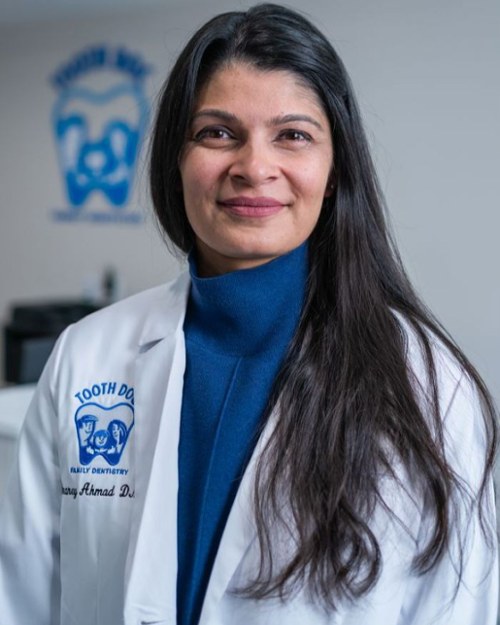
Imaney N. Ahmad DMD
Dentist
ViewDr. Ahmad proudly serves patients in the Herndon, VA community, including Reston and Sterling. Originally from New York and Central Florida, she earned her Doctorate in Dental Medicine from Temple University’s Kornberg School of Dentistry in 2010.
During her time in Philadelphia, Dr. Ahmad gained extensive clinical experience treating one of the nation’s largest dental school patient populations, with a special focus on serving underserved and uninsured communities in North Philadelphia. That experience helped shape her deep commitment to community care and access to quality dentistry.
Dr. Ahmad is a …